

 Română
 Français
 Deutsch
 Español
 Italiano
What restoration is fixed on implants in a full-mouth rehabilitation?
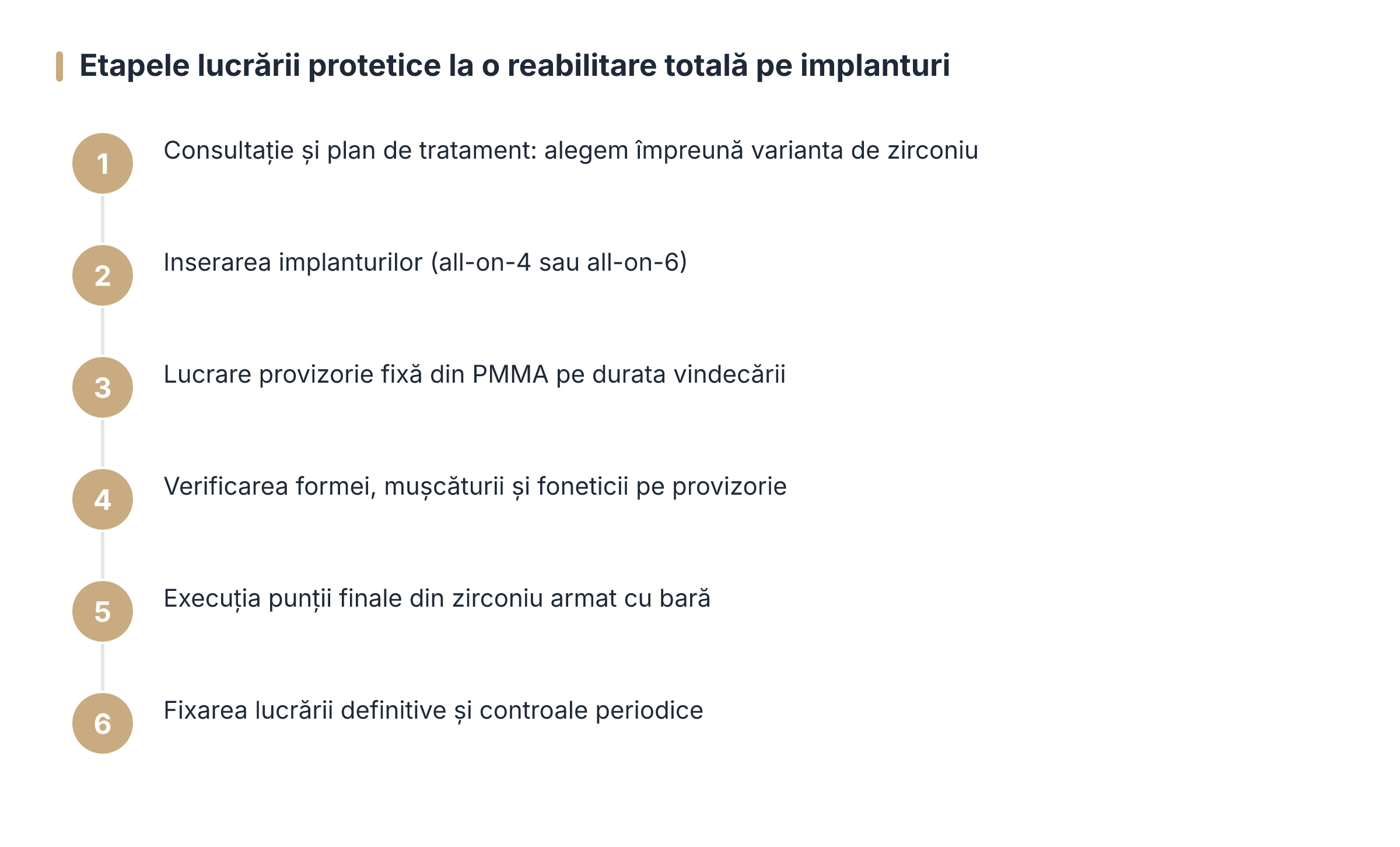
In a full-mouth rehabilitation of the all-on-4 or all-on-6 type, a complete bridge with 12 crowns is fixed onto the implants, and the material we use in our clinic for the final restoration is zirconia, always reinforced with a cobalt/titanium bar. We work with two options: standard zirconia, with a chrome-cobalt bar, and premium zirconia, with a titanium bar. Before the final restoration, the patient wears a temporary restoration made of PMMA, a modern acrylic material used exclusively for the healing stage.
Many patients comparing quotes for fixed teeth on implants come across terms such as monolithic zirconia, hybrid, bar-reinforced acrylic or PMMA, without understanding what each one refers to and why prices differ so much between clinics. In this article we explain, based on our prosthodontic experience, what each material means, at which stage it is used and why we have chosen to work exclusively with zirconia for definitive restorations.
Why do we make final restorations only from zirconia, not from composite or acrylic?
Our decision comes straight from practice. Over time we have seen final composite restorations fracture under chewing forces, especially in fully edentulous patients, where all the pressure from chewing is transferred onto a single bridge, without the natural cushioning provided by one's own teeth. A fracture in the definitive restoration means discomfort, additional appointments and, sometimes, remaking the entire bridge.
That is why, in our clinic, final restorations on implants are made exclusively from zirconia, at a price level designed to remain affordable for patients. Zirconia is a high-strength technical ceramic, used in dentistry precisely because it withstands chewing forces very well and keeps its colour and shape over time, without staining or wearing down visibly, as happens with acrylic and composite materials.
One aspect that creates confusion: some offers on the market describe an "acrylic restoration on all-on-4" as a cheaper definitive option. In reality, acrylic is not a final restoration material for this type of rehabilitation; in our practice, PMMA-type acrylic materials have a single role, that of a temporary restoration during healing. When you compare quotes, ask explicitly what material the FINAL restoration is made of, not just the one you go home with in the first stage.
What does zirconia mean in practical terms for the patient?
For the patient, zirconia means three practical things: fracture resistance, a natural appearance and easy cleaning. The ceramic surface is smooth and does not retain plaque as easily as acrylic, which matters enormously in a full-arch bridge, where hygiene around the implants determines their long-term health. Aesthetically, zirconia can be individualised in shade and translucency, so that the fixed teeth look natural, an aspect we also detail on our dental aesthetics page.
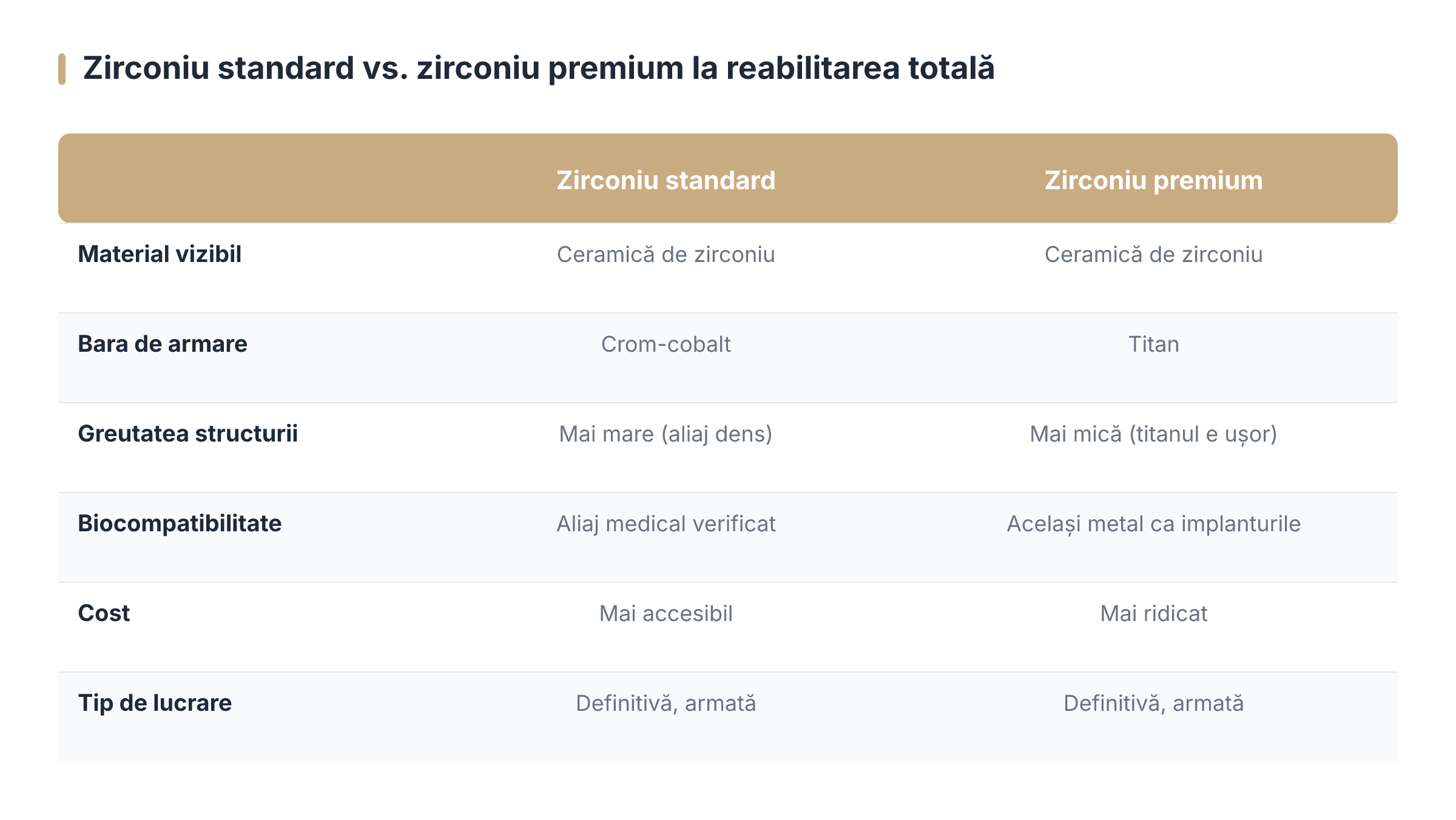
Standard or premium zirconia: what is the difference between the chrome-cobalt bar and the titanium one?
Both options we offer have the same zirconia ceramic on the outside. The difference lies in the internal reinforcing structure, that is, the metal bar on which the bridge is built:
- Standard zirconia: the zirconia bridge is reinforced with a chrome-cobalt bar, a rigid medical alloy proven over decades in dental prosthodontics.
- Premium zirconia: the reinforcement is made with a titanium bar, the same biocompatible metal the implants themselves are made of, and lighter than chrome-cobalt.
Why do we insist on bar reinforcement? A full-arch bridge on implants has 10 to 12 teeth joined together, supported by 4 or 6 implants. Without an internal metal structure, chewing forces concentrate in the areas between the implants and can crack the restoration over time, and they place uneven pressure on the implants. The bar distributes these forces evenly and ensures the durability of the entire construction. This is exactly why we do not deliver non-reinforced final restorations, regardless of the material.
At the prosthodontic consultation we discuss with each patient which option suits them, depending on the clinical situation, the chewing forces (for example, patients who grind their teeth) and the budget. Both options are definitive solutions, designed for many years of use.
What is the role of the temporary PMMA restoration and why don't you get zirconia from day one?
PMMA (polymethyl methacrylate) is a modern acrylic material, computer-milled, which we use exclusively for the temporary restoration. Immediately or shortly after the implants are placed, the patient receives a fixed PMMA bridge with which they eat, speak and smile normally during osseointegration, that is, the period in which the implants biologically fuse with the bone.
This stage is not a compromise, but a necessary part of the treatment, with precise roles:
- it protects the implants from excessive forces during the healing period;
- it allows us to test the shape, length and position of the teeth in the patient's mouth;
- it guides the shaping of the gums around the future definitive restoration;
- it gives us time to correct any detail of the bite or phonetics (speech) before the definitive version.
Only after complete healing and after all these details have been validated do we move on to the final restoration made of reinforced zirconia. In practice, the PMMA temporary is the "draft" we refine together with the patient, and zirconia is the definitive version, made according to a design already tested in function.
How do the materials compare with each other: strength, aesthetics, hygiene, cost?
To help you find your way easily among the terms used in quotes, here is the practical comparison, as we explain it to our patients:
- Strength: zirconia reinforced with a metal bar is the most fracture-resistant of the materials used in full-mouth rehabilitations. PMMA has sufficient strength for the temporary period, but it wears down and is not designed for years of use. Composite, based on our experience with restorations that fractured, we do not consider suitable for the definitive restoration.
- Aesthetics: zirconia keeps its colour and gloss over time and can be individualised for a natural appearance. Acrylic materials stain from coffee, wine or tobacco and lose their appearance faster.
- Hygiene: the ceramic surface of zirconia is easier to clean and retains less plaque, a direct advantage for the health of the gums and the implants.
- Cost: zirconia costs more than acrylic materials, justified by the material itself, the reinforcing bar and the laboratory work. The difference between standard and premium lies in the chrome-cobalt versus titanium bar. Seen in the long term, a material that does not need to be remade often proves to be the more economical choice.
Details about zirconia crowns, including on natural teeth or individual implants, can be found on our page dedicated to zirconia dental crowns.
How do we decide together on the right option at the consultation?
The choice between standard and premium zirconia is not made from a catalogue, but following a clinical assessment. As a multidisciplinary clinic, the treatment plan for a full-mouth rehabilitation involves both the implantologist and the prosthodontist, so that the position of the implants and the design of the future zirconia bridge are planned together from the very beginning, not separately.
At the consultation we assess the quality of the bone, the space available for the restoration, the bite and the patient's habits (bruxism, for example, influences the choice of reinforcement), then we transparently present the two options for a zirconia restoration on implants, with the related differences and costs. The patient leaves the consultation knowing exactly what material they will have in their mouth, at which stage and why.
If you are at the stage of comparing quotes for a full-mouth rehabilitation, we encourage you to come to a specialist consultation with the quotes you have received: we can explain to you point by point what each material mentioned there means. You can find us at our clinic in Cluj-Napoca.
Frequently asked questions
Can the final restoration on all-on-4 be made of acrylic, to make it cheaper?
We do not recommend this and, in our practice, there are no final acrylic restorations on all-on-4. We use PMMA-type acrylic materials exclusively for the temporary restoration, during implant healing. For the definitive restoration we only make zirconia bridges, reinforced with a chrome-cobalt or titanium bar, precisely because we have seen restorations made of weaker materials fracture under chewing forces. If a quote mentions acrylic as the final option, ask explicitly what happens in case of wear or fracture and what material comes next.
What is the difference between standard and premium zirconia?
The visible zirconia ceramic is the same in both options. The difference lies in the metal reinforcing bar inside the bridge: in the standard version we use a chrome-cobalt bar, a rigid and proven medical alloy, while in the premium version we use a titanium bar, a biocompatible and lighter metal, the same one the implants are made of. Both are definitive and durable solutions; we make the choice together at the consultation, depending on the clinical situation, the patient's chewing forces and the budget.
Why is the zirconia bridge reinforced with a metal bar?
A full-arch bridge has 10 to 12 teeth joined together on only 4 or 6 implants, so chewing forces concentrate in the segments between the implants. The metal bar inside the restoration distributes these forces evenly and prevents cracks and fractures over time. Based on our experience with non-reinforced restorations or composite ones that fractured, reinforcement with a chrome-cobalt or titanium bar is the condition for the durability of a full-mouth rehabilitation, which is why we include it in all final restorations.
How long do I wear the temporary PMMA restoration before zirconia?
The temporary restoration is worn during osseointegration, that is, the period in which the implants biologically fuse with the bone, usually a few months ( 4-6), depending on bone quality and each patient's healing. During this period you eat and speak normally, with some caution regarding very hard foods. The temporary stage also allows us to check the shape of the teeth, the bite and the phonetics, so that the final zirconia restoration is made according to a design already tested in your mouth.
Does zirconia stain or wear down over time?
Zirconia is a colour-stable ceramic that does not stain from coffee, wine or tobacco as acrylic materials do, and it has a high resistance to wear. Its smooth surface retains little plaque, which helps maintain the health of the gums around the implants. Daily hygiene adapted to an implant-supported restoration and regular check-ups remain important, however; at these check-ups we examine both the bridge and the implants and surrounding tissues.
Can I chew anything with a zirconia bridge on implants?
With the final restoration made of reinforced zirconia you can eat a varied and normal diet, including foods with a firm texture, because the material and the internal bar are designed to take on chewing forces. We nevertheless recommend caution with extreme habits, such as cracking nuts or ice with your teeth, which also applies to natural teeth. For patients who grind their teeth we may recommend a protective night guard, and we discuss this aspect as early as the treatment planning stage.
This article is for information purposes only and does not replace a specialist consultation. For a diagnosis and a personalised treatment plan, please book an appointment.